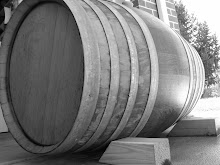
This adventure started months ago when deciding at which capacity to begin with. I suggested to Chad that we make 20-30 gallons and divide it into three separate ageing vessels – French oak barrel, Hungarian oak barrel, and a glass carboy with oak chips. After reading up on the product of these smaller barrels and ageing vessels, and their reduced ageing time due to increased surface to volume ratio, Chad had decided we needed to go with one full-sized oak barrel to get the right feeling and result.
I was naturally reluctant due to the financial commitment of the larger size and also the intimidation it created. The show would go on, however.
After speaking with Eames Peterson (Alfred Eames Cellars, Paonia, CO) and Jay from Concetta Cellars (Castle Rock, CO) Chad had a full-on conviction for starting with a full-sized French oak barrel and, of course, purchased two from Paul Bonaquisti (Bonaquisti Wines, Denver, CO). The barrels have been used for two-three years, leaving a little oak flavor and tannin yet to be extracted from them.
We read up on winemaking, watched videos to aid in understanding and comprehension, and purchased the bare necessities to get this project going. While searching unsuccessfully for a picking bin to bring grapes back from the western slope and also ferment in, we caught a major break. One evening in late August, several picking bins just showed up at our neighbors’ house five houses from ours. We had to investigate.
As it turns out our neighbors (Sean, Candace, and their 4-1/2 year old son Brendan) had just acquired the proper licensing and permits to allow them to start a commercial winery in their home. They had just purchased all the winemaking equipment for this new adventure – including stainless tanks, a crusher/destemmer, press, barrels, bins, and full-on lab setup. Needless to say, they would become our allies and close friends through this first crush.
As fall neared, we setup a contract with Eames Peterson for 1,000 pounds of whatever red (technically black) grapes he could get his hands on. It is known that you can’t make superior wine with inferior grapes so we didn’t want to go on our own to purchase from a grower that would charge a premium for leftover grapes. Eames also told us we could use one of his bins to ferment in. We are forever indebted to this wonderful guy. He said come late September/early October we should be ready to come to the western slope to pick the grapes up on a moments notice. That is essentially what happened.
It was the last week of September, 2008 (21st through 28th) and I had a five day weekend due to the restaurant closing for kitchen maintenance/updating. I had just broken up with my girlfriend of 5 years and decided it was the perfect time to take a soul-searching trip into the mountains for several days. The weather prior to this week was cold and rainy around the state – delaying the ripening of our grapes and giving me the confidence that I could take this trip with no worries of the grapes being ready. Well – the fucking sun came out. And it made for a really spectacular trip – amazing scenery and wildlife, great weather, nice people along the way. As I stopped into my Mom’s cabin on the way back over Cottonwood pass, I received word from Eames that the grapes were ripe, being picked tomorrow (thurs), and would be ready for pickup at his place on Friday. So much for the remainder of the trip, it was time to get back to Denver and make some final preparations. “No problem” I told Eames – “see you Friday morning.” Ready or not, which we were not, here comes the grapes.
Chad jumps in the truck to take it to work Thurs morning and nothing. No power. No juice. Nada. So I spend a couple of hours getting the battery tested, charged, and finally replaced with mixed results. Sometimes it starts, sometimes it doesn’t. We say fuck it, we have to chance it because it is our only option and Friday is our only window of opportunity to get the grapes. So we wake up at 5:30 am, eat breakfast burritos we had made the morning before and grab tea and coffee and hit the road, holding our breath and crossing our fingers. The drive that morning to Paonia was gorgeous – clear and sunny with fall colors that made the mountains look like they were on fire. I told Chad that if we continued with winemaking in the future and had to make this drive every year to pickup our grapes, we would be very lucky. Before we knew it, we were in Paonia.
We got to Eames place just in time to help him bucket 800 pounds of grapes out of the bed of his truck so he could get to the bins below. This was no small task and this labor-intensive method is the same that he and his daughter Lacy will employ to process the 25 tons of grapes Eames will handle this year. Anyway, we get the truck unloaded and moved out of the way and get our 1100 pound bin into the back of Chad’s truck – miraculously. Eames tractor was huffing and puffing to get that much weight that high in the air without tipping over. We were all holding our breath watching that tractor do this dance with gravity for like three minutes. In the end we were successful. We ate the sandwiches that Carissa had packed for us, slammed a couple of ice-cold Pepsis, and off we went.
On the way home, we ran through several small rainstorms that would last for a couple of miles and then the sun would come out. I think it was ideal because it kept the grapes cool on the ride. We made a quick pee and stretch stop in Georgetown and while we were standing at the truck, talking about our day so far, a grey primered early 80's Ford with a big yellow duck glued to the cab pulled up. The two guys inside were just about as hillbilly as you can get. The driver threw the truck into reverse, hit the gas, and smashed into the concrete pole that separated his truck from a line of gas pumps. If that pole wasn't there, you wouldn't be reading this right now. Anyway, we had a good laugh, jumped back in the truck and headed on our way. We got back to Denver just in time for rush hour traffic which delayed our arrival by about a half an hour. But nothing could break our spirits – we were high on excitement.
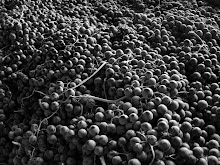
W arrived at the house and were bombarded by Kira, Kyle, Vicki, Lynn, and the neighbors within just a few minutes. We had to get a move on if we wanted to process the grapes that night. We got the destemmer/crusher from the neighbors and seven 35 gallon trash cans from home depot. After rinsing everything with a one-step cleaner/sanitizer from the boys at Stomp Them Grapes we were off. We had the truck backed up to the destemmer with all the grapes in trash cans in the back and the picking bin on the output side of the destemmer, creating a fairly efficient system. The destemming/crushing process probably took a total of 35-40 minutes once we were actually going. Then the cigars were lit, beers cracked open, and the cleaning party started. They say winemaking is 90 percent cleaning and sanitizing. I don’t know who “they” are but they sure are right.
A quick note about the grapes – they were contracted through Whitewater Hill Vineyards with Eames being the broker. Grapes were purchased @ $.80/lb for a total of $800.00. Grapes were picked Thurs Sept 25th, 2008 and delivered to Eames in Paonia that evening. We picked them up the next morning @11:30. Eames told us the grapes had come in @ just under 26 brix; as we never checked it with a refractometer, we are taking his word. Additionally, stupid me never took a specific gravity reading of the must prior to fermentation, oops.
Anyway, with the must in the fermenting bin, we added 5 teaspoons of Potassium Metabisulfite to kill any bacteria and native yeast that are present to prepare for a controlled fermentation. An acid test on Saturday showed .825% tartaric – and we didn’t make any adjustment to the must. We then gave 24 hours for the sulfite to do its job and inoculated the must with yeast via the Eames method at 2am Sat night (or Sunday morning, technically). I had read an excerpt from a fellow winemaker once that said: harvest renders the clock on the wall useless. The only difference between night and day is whether you are drinking coffee or beer. We would soon find out the reality of this statement.
We allowed the yeast to integrate on its own at first to make sure we didn’t kill or harm it by overwhelming it. At about 2:30 pm Sunday we determined that the yeast was surviving and thriving in its small spot of initial placement. We waited until noon Monday to spread the yeast over the entire must surface and gave it it’s first stir shortly thereafter.
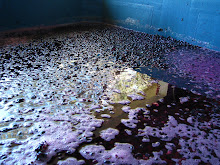
The first punchdown was a gentle one at 10:15 Monday evening and we could tell the fermentation was kicking because we had started to see co2 bubbles coming to the surface while punching. It was a great feeling to know that we hadn’t killed the yeast. Tuesday morning (10:00 am) confirmed that we were in the middle of a full-on fermentation as the cap had formed and risen to the surface with strength and determination. We would punch the cap 4 times per day during this time. The must temperature was a steady 70 degrees. Quickly we adjusted the punch down time to be on the 6’s and 12’s. Sounds easy enough on paper – but then you realize that sometimes your body doesn’t want to be up until midnight or back up at six in the morning. I can recall several times that we would punch the cap, enjoy a nice meal, watch a movie – I’d take a bath to soothe the sore muscles, Chad and Carissa would pass out and I would go read in bed. My eyes would get heavy, I’d turn out the light and drift off only to wake myself up with total panic like “FUCK, what time is it?” Put my clothes back on and go punch the cap again. By the end of the fermentation we would grow very tired of this schedule. But in the grand scheme of things, it’s like two to three weeks out of the year for a winemaker, fairly doable.
At 4:20pm on 10/07/08 with a must temperature of 72 degrees, our specific gravity was reading 1.021. We knew the end was coming so we backed off the punchdowns to 3x per day (7:00am, 3:00pm, and 11:00pm). Later that evening we took another SG reading to determine the rate of fermentation. At 9:00pm it read 1.017. We had our first “wine” taste. Although still in the conversion process and filled with co2 which gave it an effervescence – it was tasting pretty good. It was no longer a really nice Welch’s grape juice but rather a bubbly, young red wine. We were all smiles.
The next day, Wednesday the 8th (1:15pm), the SG read 1.012 and the must had cooled to 65 degrees. I knew I needed to act quickly to get the barrels ready for what was to come. At 3:00pm I had filled our Cadus barrel (from Bourgogne, France) with 40 oz of soda ash and hot filtered water. I would run the water through the chlorine filter we had rigged to run off the garden hose outside and put it in my big stock pot on the stove. I would get it as hot as possible and then pour it into the barrel. This process was time consuming but necessary. Water out of the tap would have too much chlorine to be safe in the barrel and cool water would not penetrate the staves like we needed. The barrel was filled completely, capped and rolled occasionally for the next 23 hours. At 2:00pm Thurs I emptied the barrel and filled it with 1-1/3 lb of Sodium Metabisulfite and ¾ lb Citric Acid and cool, filtered water. I did this with the carboys and growlers as well to ensure they were sanitized and ready.
The night of Thursday the 9th brought a big change in weather. It cooled down to near freezing over night and just rained its ass off. Chad had the brilliant idea to cover the fermenting bin with a tarp and place an electric heater inside to maintain its temperature. Otherwise, the must would have cooled considerably, the yeast would have been killed and we would have been stuck with a stalled ferment. Luckily, that didn’t happen. In fact, we were able to raise the must temp to 72 degrees.
At 8:00 am on the 14th (tues), although we didn’t know at the time, Chad had performed the last punchdown. By 2:30 pm – the cap had sunk indicating that the fermentation was complete. Yeast eats sugar and produces alcohol and co2. The co2 makes the cap form and rise which protects the juice from bacteria and oxidation. Once the cap had sunk, the wine was no longer protected so it was time to get it in the barrel. We kept the wine covered and made final preparations to barrel.
We did a drain and final rinse of the barrel and then moved it into our barrel room in the basement. We had planned to siphon the wine from the bin down to the barrel through a 60’ tube. What we didn’t take into account, and what almost killed Chad (again), was that there was still a bit of co2 in the wine. Once we had setup the tubing, readied the barrel in the basement, fashioned a filter for the bin-side of the tube, it was go time. Chad began siphoning like a tried and true hooker at the chicken ranch. Sucking and taking in fumes and large mouthfuls of wine; all the while, never getting a good suction and continuous siphon going. We changed the filter side of the tubing after realizing that we were having major clogging problems. We used a strainer from the kitchen wrapped in nylon netting with the tube in the center (this way we could create a pool of sediment-free wine from which to siphon from). This worked and soon we had a good flow of wine to the barrel. It didn’t take long to siphon all the free-run away from the skins and then we were forced to stop siphoning so we wouldn’t suck skins and seeds in as well. The tubing was then scrapped for five-gallon buckets which would become our means of transporting the rest of the juice to the barrel. I am really glad we had help at this point - thanks Tracy, Ellington, and Sarah.
I was naturally reluctant due to the financial commitment of the larger size and also the intimidation it created. The show would go on, however.
After speaking with Eames Peterson (Alfred Eames Cellars, Paonia, CO) and Jay from Concetta Cellars (Castle Rock, CO) Chad had a full-on conviction for starting with a full-sized French oak barrel and, of course, purchased two from Paul Bonaquisti (Bonaquisti Wines, Denver, CO). The barrels have been used for two-three years, leaving a little oak flavor and tannin yet to be extracted from them.
We read up on winemaking, watched videos to aid in understanding and comprehension, and purchased the bare necessities to get this project going. While searching unsuccessfully for a picking bin to bring grapes back from the western slope and also ferment in, we caught a major break. One evening in late August, several picking bins just showed up at our neighbors’ house five houses from ours. We had to investigate.
As it turns out our neighbors (Sean, Candace, and their 4-1/2 year old son Brendan) had just acquired the proper licensing and permits to allow them to start a commercial winery in their home. They had just purchased all the winemaking equipment for this new adventure – including stainless tanks, a crusher/destemmer, press, barrels, bins, and full-on lab setup. Needless to say, they would become our allies and close friends through this first crush.
As fall neared, we setup a contract with Eames Peterson for 1,000 pounds of whatever red (technically black) grapes he could get his hands on. It is known that you can’t make superior wine with inferior grapes so we didn’t want to go on our own to purchase from a grower that would charge a premium for leftover grapes. Eames also told us we could use one of his bins to ferment in. We are forever indebted to this wonderful guy. He said come late September/early October we should be ready to come to the western slope to pick the grapes up on a moments notice. That is essentially what happened.
It was the last week of September, 2008 (21st through 28th) and I had a five day weekend due to the restaurant closing for kitchen maintenance/updating. I had just broken up with my girlfriend of 5 years and decided it was the perfect time to take a soul-searching trip into the mountains for several days. The weather prior to this week was cold and rainy around the state – delaying the ripening of our grapes and giving me the confidence that I could take this trip with no worries of the grapes being ready. Well – the fucking sun came out. And it made for a really spectacular trip – amazing scenery and wildlife, great weather, nice people along the way. As I stopped into my Mom’s cabin on the way back over Cottonwood pass, I received word from Eames that the grapes were ripe, being picked tomorrow (thurs), and would be ready for pickup at his place on Friday. So much for the remainder of the trip, it was time to get back to Denver and make some final preparations. “No problem” I told Eames – “see you Friday morning.” Ready or not, which we were not, here comes the grapes.
Chad jumps in the truck to take it to work Thurs morning and nothing. No power. No juice. Nada. So I spend a couple of hours getting the battery tested, charged, and finally replaced with mixed results. Sometimes it starts, sometimes it doesn’t. We say fuck it, we have to chance it because it is our only option and Friday is our only window of opportunity to get the grapes. So we wake up at 5:30 am, eat breakfast burritos we had made the morning before and grab tea and coffee and hit the road, holding our breath and crossing our fingers. The drive that morning to Paonia was gorgeous – clear and sunny with fall colors that made the mountains look like they were on fire. I told Chad that if we continued with winemaking in the future and had to make this drive every year to pickup our grapes, we would be very lucky. Before we knew it, we were in Paonia.
We got to Eames place just in time to help him bucket 800 pounds of grapes out of the bed of his truck so he could get to the bins below. This was no small task and this labor-intensive method is the same that he and his daughter Lacy will employ to process the 25 tons of grapes Eames will handle this year. Anyway, we get the truck unloaded and moved out of the way and get our 1100 pound bin into the back of Chad’s truck – miraculously. Eames tractor was huffing and puffing to get that much weight that high in the air without tipping over. We were all holding our breath watching that tractor do this dance with gravity for like three minutes. In the end we were successful. We ate the sandwiches that Carissa had packed for us, slammed a couple of ice-cold Pepsis, and off we went.
On the way home, we ran through several small rainstorms that would last for a couple of miles and then the sun would come out. I think it was ideal because it kept the grapes cool on the ride. We made a quick pee and stretch stop in Georgetown and while we were standing at the truck, talking about our day so far, a grey primered early 80's Ford with a big yellow duck glued to the cab pulled up. The two guys inside were just about as hillbilly as you can get. The driver threw the truck into reverse, hit the gas, and smashed into the concrete pole that separated his truck from a line of gas pumps. If that pole wasn't there, you wouldn't be reading this right now. Anyway, we had a good laugh, jumped back in the truck and headed on our way. We got back to Denver just in time for rush hour traffic which delayed our arrival by about a half an hour. But nothing could break our spirits – we were high on excitement.
W arrived at the house and were bombarded by Kira, Kyle, Vicki, Lynn, and the neighbors within just a few minutes. We had to get a move on if we wanted to process the grapes that night. We got the destemmer/crusher from the neighbors and seven 35 gallon trash cans from home depot. After rinsing everything with a one-step cleaner/sanitizer from the boys at Stomp Them Grapes we were off. We had the truck backed up to the destemmer with all the grapes in trash cans in the back and the picking bin on the output side of the destemmer, creating a fairly efficient system. The destemming/crushing process probably took a total of 35-40 minutes once we were actually going. Then the cigars were lit, beers cracked open, and the cleaning party started. They say winemaking is 90 percent cleaning and sanitizing. I don’t know who “they” are but they sure are right.
A quick note about the grapes – they were contracted through Whitewater Hill Vineyards with Eames being the broker. Grapes were purchased @ $.80/lb for a total of $800.00. Grapes were picked Thurs Sept 25th, 2008 and delivered to Eames in Paonia that evening. We picked them up the next morning @11:30. Eames told us the grapes had come in @ just under 26 brix; as we never checked it with a refractometer, we are taking his word. Additionally, stupid me never took a specific gravity reading of the must prior to fermentation, oops.
Anyway, with the must in the fermenting bin, we added 5 teaspoons of Potassium Metabisulfite to kill any bacteria and native yeast that are present to prepare for a controlled fermentation. An acid test on Saturday showed .825% tartaric – and we didn’t make any adjustment to the must. We then gave 24 hours for the sulfite to do its job and inoculated the must with yeast via the Eames method at 2am Sat night (or Sunday morning, technically). I had read an excerpt from a fellow winemaker once that said: harvest renders the clock on the wall useless. The only difference between night and day is whether you are drinking coffee or beer. We would soon find out the reality of this statement.
We allowed the yeast to integrate on its own at first to make sure we didn’t kill or harm it by overwhelming it. At about 2:30 pm Sunday we determined that the yeast was surviving and thriving in its small spot of initial placement. We waited until noon Monday to spread the yeast over the entire must surface and gave it it’s first stir shortly thereafter.
The first punchdown was a gentle one at 10:15 Monday evening and we could tell the fermentation was kicking because we had started to see co2 bubbles coming to the surface while punching. It was a great feeling to know that we hadn’t killed the yeast. Tuesday morning (10:00 am) confirmed that we were in the middle of a full-on fermentation as the cap had formed and risen to the surface with strength and determination. We would punch the cap 4 times per day during this time. The must temperature was a steady 70 degrees. Quickly we adjusted the punch down time to be on the 6’s and 12’s. Sounds easy enough on paper – but then you realize that sometimes your body doesn’t want to be up until midnight or back up at six in the morning. I can recall several times that we would punch the cap, enjoy a nice meal, watch a movie – I’d take a bath to soothe the sore muscles, Chad and Carissa would pass out and I would go read in bed. My eyes would get heavy, I’d turn out the light and drift off only to wake myself up with total panic like “FUCK, what time is it?” Put my clothes back on and go punch the cap again. By the end of the fermentation we would grow very tired of this schedule. But in the grand scheme of things, it’s like two to three weeks out of the year for a winemaker, fairly doable.
At 4:20pm on 10/07/08 with a must temperature of 72 degrees, our specific gravity was reading 1.021. We knew the end was coming so we backed off the punchdowns to 3x per day (7:00am, 3:00pm, and 11:00pm). Later that evening we took another SG reading to determine the rate of fermentation. At 9:00pm it read 1.017. We had our first “wine” taste. Although still in the conversion process and filled with co2 which gave it an effervescence – it was tasting pretty good. It was no longer a really nice Welch’s grape juice but rather a bubbly, young red wine. We were all smiles.
The next day, Wednesday the 8th (1:15pm), the SG read 1.012 and the must had cooled to 65 degrees. I knew I needed to act quickly to get the barrels ready for what was to come. At 3:00pm I had filled our Cadus barrel (from Bourgogne, France) with 40 oz of soda ash and hot filtered water. I would run the water through the chlorine filter we had rigged to run off the garden hose outside and put it in my big stock pot on the stove. I would get it as hot as possible and then pour it into the barrel. This process was time consuming but necessary. Water out of the tap would have too much chlorine to be safe in the barrel and cool water would not penetrate the staves like we needed. The barrel was filled completely, capped and rolled occasionally for the next 23 hours. At 2:00pm Thurs I emptied the barrel and filled it with 1-1/3 lb of Sodium Metabisulfite and ¾ lb Citric Acid and cool, filtered water. I did this with the carboys and growlers as well to ensure they were sanitized and ready.
The night of Thursday the 9th brought a big change in weather. It cooled down to near freezing over night and just rained its ass off. Chad had the brilliant idea to cover the fermenting bin with a tarp and place an electric heater inside to maintain its temperature. Otherwise, the must would have cooled considerably, the yeast would have been killed and we would have been stuck with a stalled ferment. Luckily, that didn’t happen. In fact, we were able to raise the must temp to 72 degrees.
At 8:00 am on the 14th (tues), although we didn’t know at the time, Chad had performed the last punchdown. By 2:30 pm – the cap had sunk indicating that the fermentation was complete. Yeast eats sugar and produces alcohol and co2. The co2 makes the cap form and rise which protects the juice from bacteria and oxidation. Once the cap had sunk, the wine was no longer protected so it was time to get it in the barrel. We kept the wine covered and made final preparations to barrel.
We did a drain and final rinse of the barrel and then moved it into our barrel room in the basement. We had planned to siphon the wine from the bin down to the barrel through a 60’ tube. What we didn’t take into account, and what almost killed Chad (again), was that there was still a bit of co2 in the wine. Once we had setup the tubing, readied the barrel in the basement, fashioned a filter for the bin-side of the tube, it was go time. Chad began siphoning like a tried and true hooker at the chicken ranch. Sucking and taking in fumes and large mouthfuls of wine; all the while, never getting a good suction and continuous siphon going. We changed the filter side of the tubing after realizing that we were having major clogging problems. We used a strainer from the kitchen wrapped in nylon netting with the tube in the center (this way we could create a pool of sediment-free wine from which to siphon from). This worked and soon we had a good flow of wine to the barrel. It didn’t take long to siphon all the free-run away from the skins and then we were forced to stop siphoning so we wouldn’t suck skins and seeds in as well. The tubing was then scrapped for five-gallon buckets which would become our means of transporting the rest of the juice to the barrel. I am really glad we had help at this point - thanks Tracy, Ellington, and Sarah.
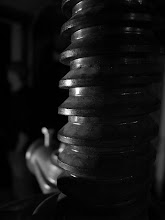
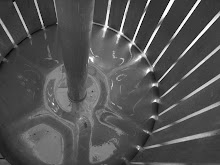
So once we siphoned as much free-run juice as we could, it was time to press the rest. We borrowed the neighbors basket press and lined it with nylon straining bags. Then we would scoop five gallons worth of skins and juice and pour it into the press. Naturally, the juice would run right through the straining bags and into another bucket while the skins were kept separate inside the press. We would repeat this process untit the press was filled with skins at which point we would put the ratchet device on and press the remaining juice out of the skins. The pomace (pressed skins) would then be discarded and we would start all over again. This process took about four hours to complete with the help of our friends. It would have taken quite a bit longer if it was just the three of us. It should be noted that we got somewhere around 65% free-run juice, 25% medium-press, and the remainder hard-press.
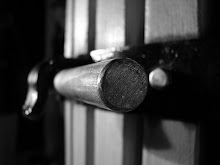
In all, we were able to produce 68.5 gallons of wine from 1,000 pounds of grapes. We have our barrel filled, one 5 gallon carboy, three 1 gallon growlers, and one 1/2 gallon jug. A regular, solid bung was placed in the barrel and everything else was topped with airlocks. I soon found out that fermentation wasn't quite complete with the wine in the barrel as it blew the bung out and sprayed wine all over the barrel room. I removed a little wine, replaced the bung, and cleaned the walls and floor. The next day, I attempted to remove the bung to make sure I hadn't taken out too much wine and BOOM!, it happened all over again. This time I got soaked with wine - even took some right in the eye. So I did the same thing all over again. Removed a little wine, replaced the bung, cleaned the room, washed the wine off of my arms and face, and went straight for the internet. I ordered two "ferm-rite" bungs. These have four holes that allow the gases of fermentation to escape and have a cap on top to seal out air. Brilliant!








No comments:
Post a Comment